

How “Wedoo” Circular Economy
There’s an old saying: Give a man a fish, and you feed him for a day. Teach a man to fish, and you feed him for a lifetime.
That is the idea behind Wedoo, an Indonesian company building machines that allow communities and businesses to turn discarded materials into something valuable, ultimately hoping to help create a circular economy across every island in Indonesia, one community at a time.
However, this ambitious company had a unique, modest start that all began in the ocean.
When Wedoo’s Co-Founder, Valerine Chandrakesuma dived in the Indonesia’s oceans back in 2017, what captured her attention was not the vividly blue ocean, but the plastic waste floating through the waters, some coming all the way from Japan. At that moment, she found herself apologizing to the fish for what humans had done to their home. And then came a realization: “I'm a human, and I could do something about it.”
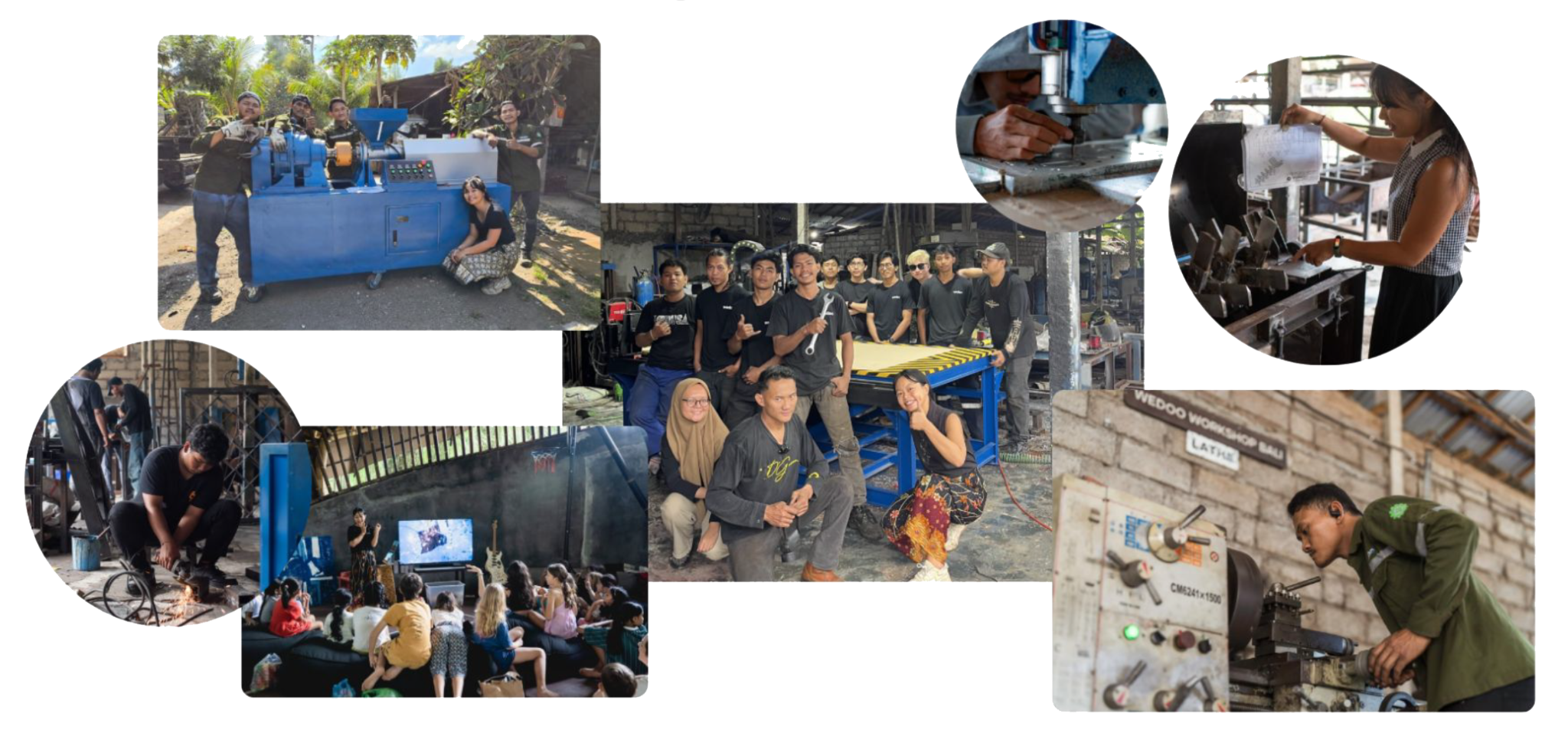
At the time, Valerine was studying architecture in Canada and began thinking about plastic not simply as waste, but as a potential construction material. She collaborated with friends to run a circular economy club on campus, wrote funding proposals, and experimented with building machines to recycle plastic waste. Between 2018 and 2020, conducting field studies tracing where plastic made her realize that, with the right tools, plastic could be transformed into something valuable, and potentially become a source of local economic activity. Initially, she planned to build the machinery in Canada and bring it to Indonesia, but found that there were few, if any, companies manufacturing waste-management machinery locally. This gap eventually led her to found Wedoo in 2022. As the company grew, its approach evolved towards decentralizing waste management, giving businesses, communities, and villages the tools to manage and transform their own waste.
“We are approaching this towards more of a decentralization of waste management, instead of centralizing it, because this is what works,” Valerine explains. In Indonesia’s island geography, transporting waste across the country can be costly and inefficient. “It doesn't make sense to have to send waste material from Papua to Java when the management can be done in their own islands,” she says.
Hence, Wedoo provides “small, but many” machines, allowing individual islands and villages to process their waste locally. The machines can also be adapted to the needs of each community: “In some places they have more plastic, some have a lot of coconuts that are going to waste. We can provide them with machines that are more appropriate and maximize the resources within each context.” Valerine comments.
“We look into how we can communicate and share what waste materials could be, and the potential of it,” Valerine said during our interview. “Without showing people through product-making, it’s really hard to convince people that these actually are really good materials and effective solutions.”
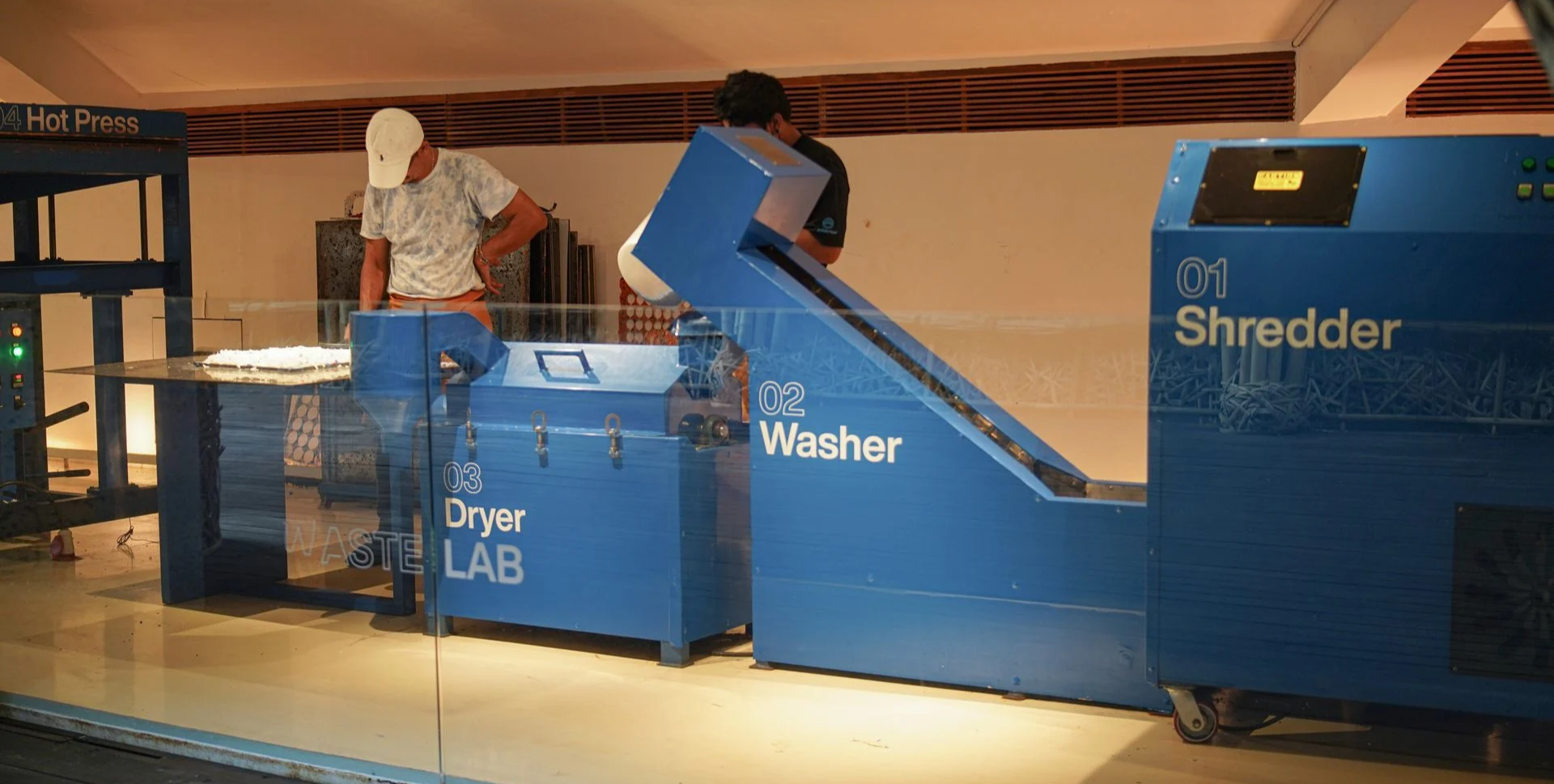
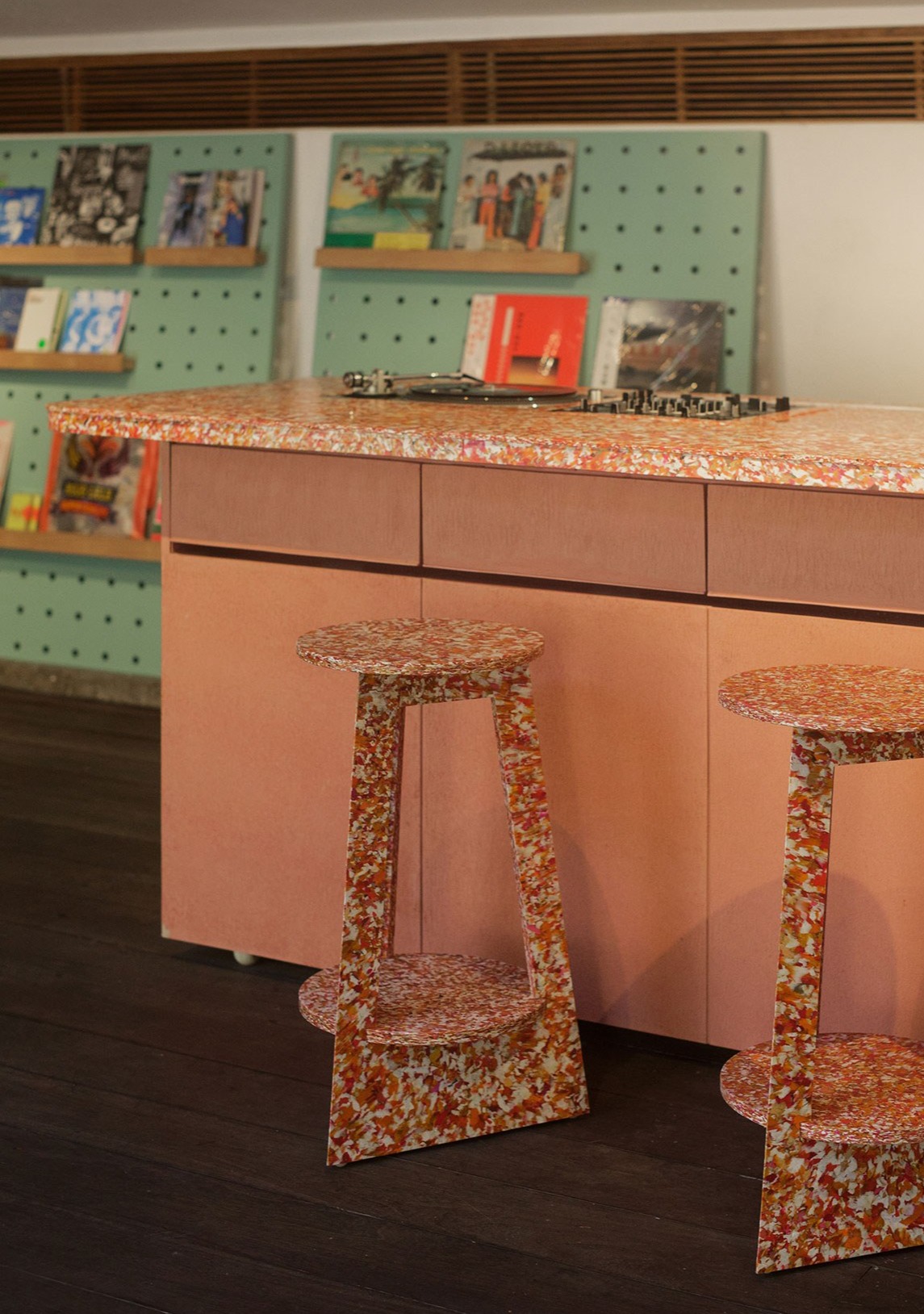
This philosophy is well demonstrated by one of Wedoo’s clients, Potato Head, a hotel and beach club in Bali. Potato Head proudly displays Wedoo’s machines at its entrance, allowing guests and staff to see how transforming waste does not necessarily require massive factories or complex infrastructure, it can happen locally, which in turn encourages further collaboration. Hence, at Potato Head, recycled waste is transformed into hotel and beach club furniture, interior elements and decor, menu boards and signage, ashtrays and other operational tools, as well as souvenirs sold in its retail area.
However, Wedoo’s ambition doesn’t stop at creating machines and providing solutions for its clients. Its sister company, Sayang, is a design research lab that experiments with new materials made from recycled waste, while also focusing on education.
“We’re sharing what we learned about recycling, about product-making out of waste materials, to the public,” Valerine explains. “Everything that we found or published [is] open source.” Rather than gatekeeping knowledge, Sayang makes its research accessible so that others can learn from it and explore what waste can become.
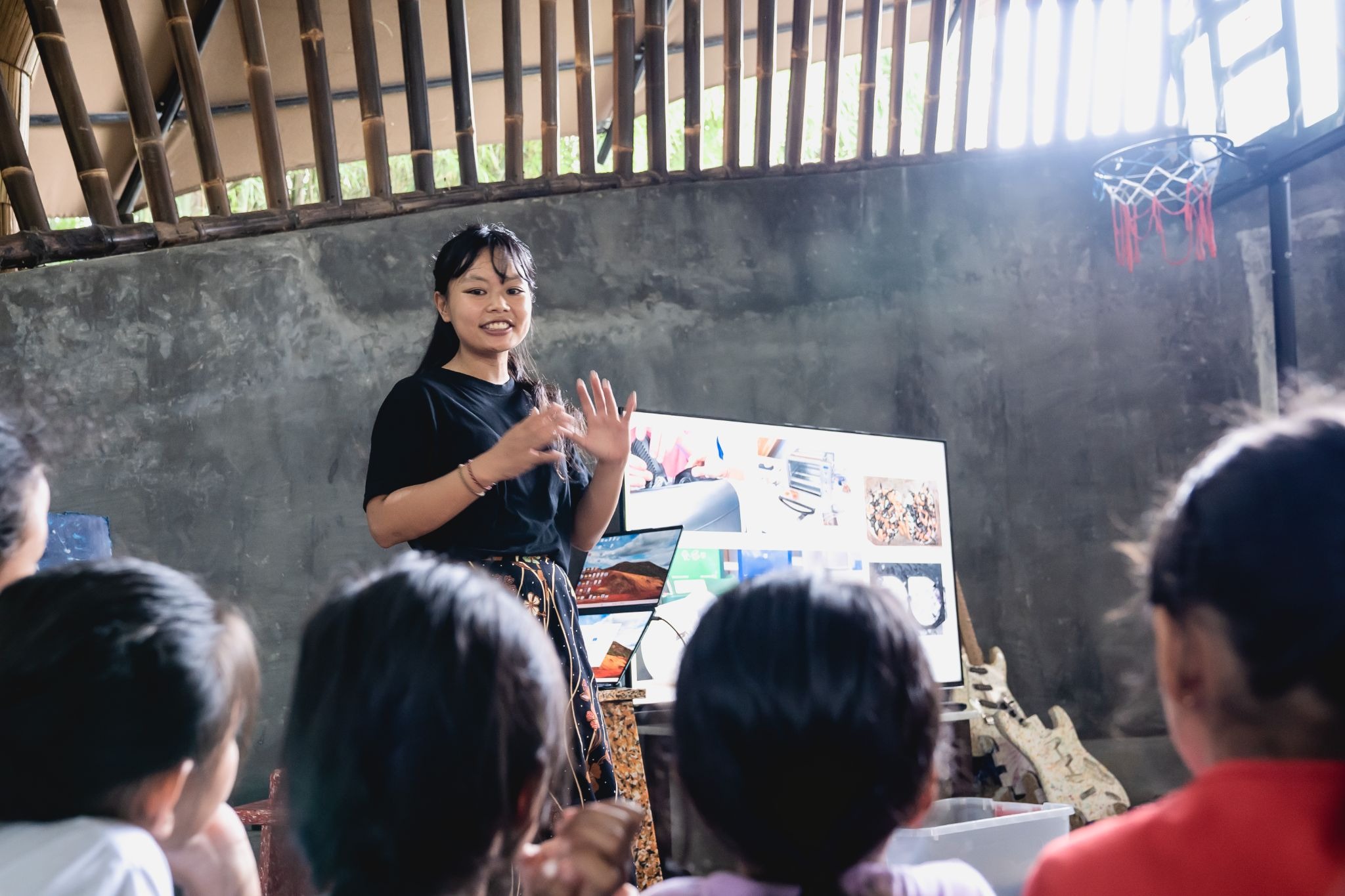
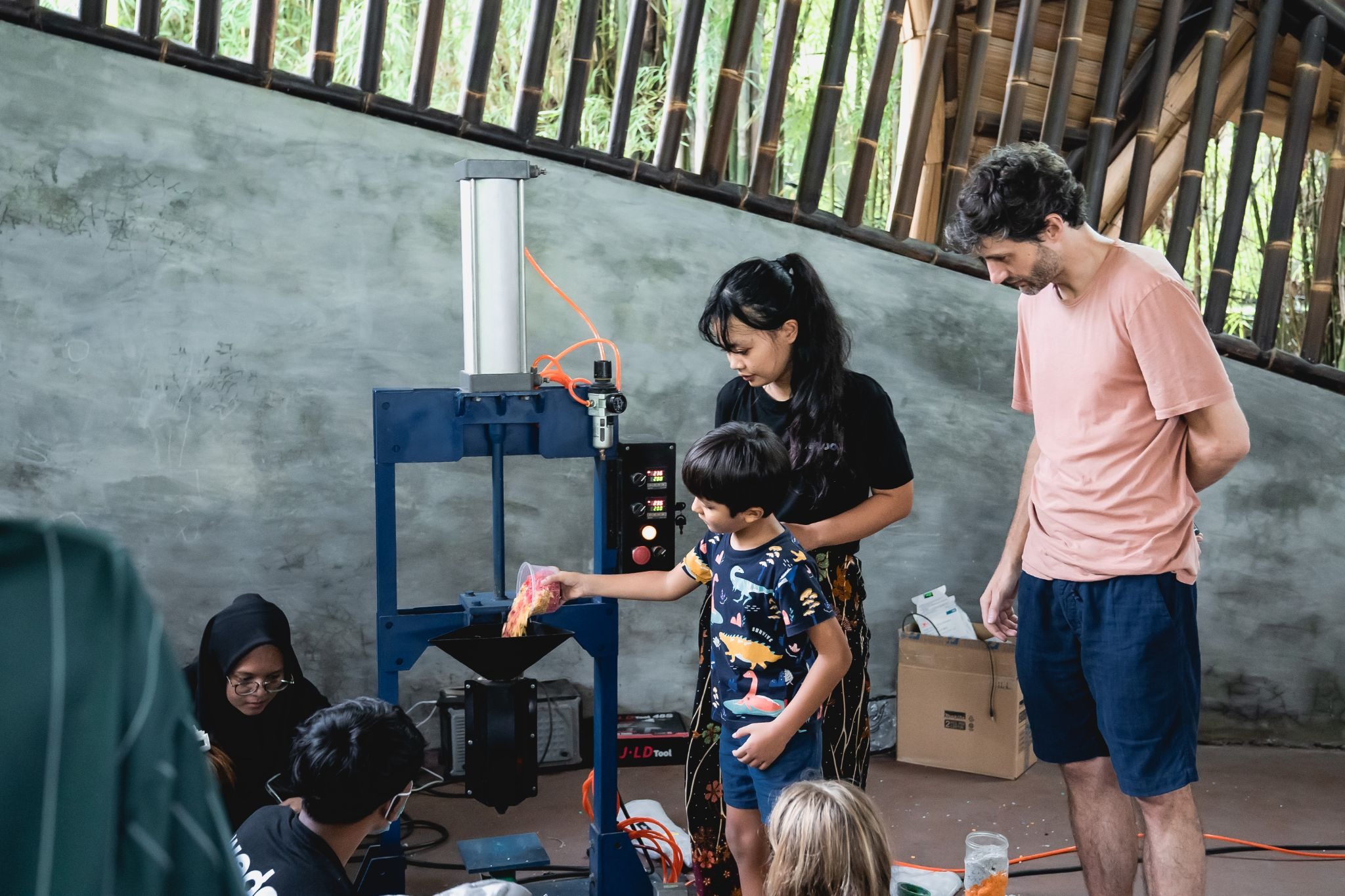
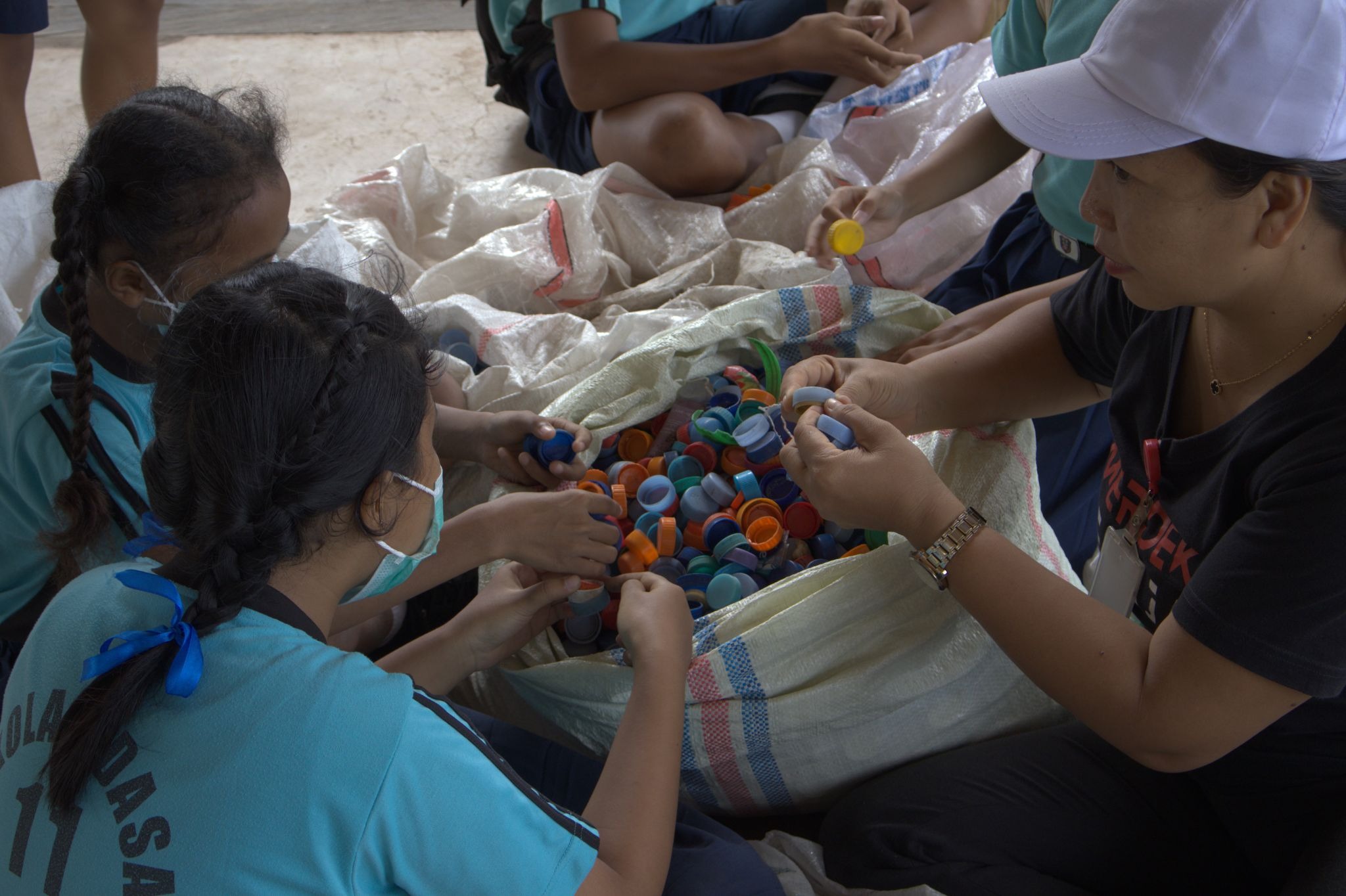
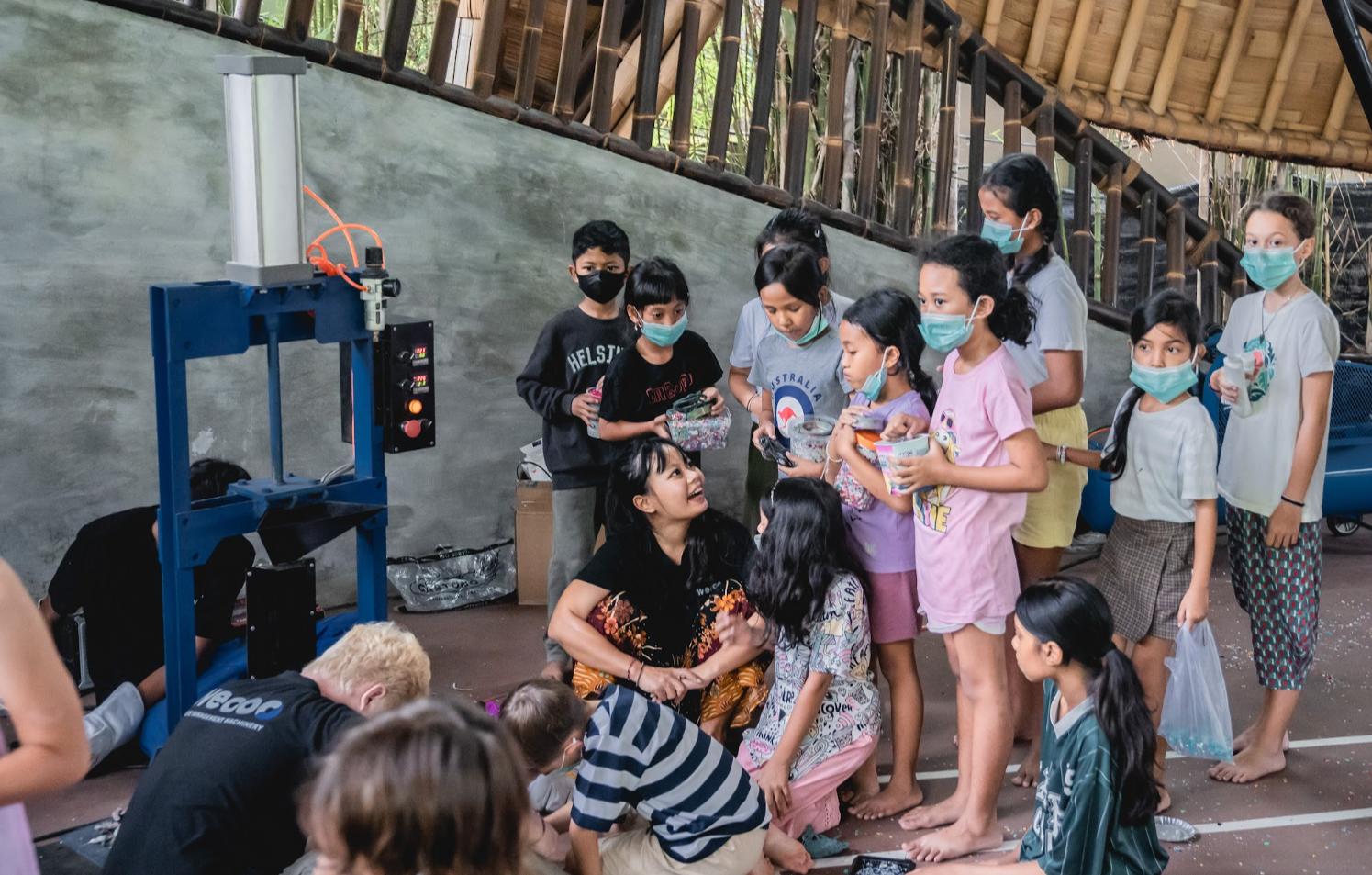
This philosophy extends to Wedoo’s workshops, where participants learn to sort, clean, and transform waste themselves. Even children can see the reasoning behind these processes by doing them firsthand. “Learning by doing is also a really big thing,” Valerine says.
Of course, there are some resistance and challenges in fully convincing other people to join in. “There is a lot of resistance. There are many people who think that recycling isn’t worth it. I think the best way to overcome that is to show people that it has value, especially economically.
We can’t expect everyone to be an environmentalist or to care about the ocean in the same way that we do. Everyone needs to eat, everyone needs money. It’s also unfair to ask people to separate waste when they’re already working three jobs to support their families.
For many people, waste is probably the last thing on their minds. But if it can become something that generates income, it means something different. They may not be doing it because they want to protect the ocean, but they’ll still do it—and it’s still a net positive for the environment. I think that’s the most effective thing.”
But changing individual attitudes is only one part of the challenge. For Wedoo, the bigger question is how to scale these solutions. One answer may lie in Gili Meno, an island between Bali and Lombok where Wedoo is currently building machines.
“It’s a small but beautiful island with tourism, and it’s really exciting to see an organization fully committed to making it as circular as possible,” Valerine says. The island could become a case study for circularity, as everything enters and leaves through a single port, making it possible to track the flow of goods and the waste they generate.
And what about young people?
Valerine’s answer is simple: “Think about nature as one of your clients.”
Whether you are a lawmaker, architect, engineer, designer, or artist, she believes nature should be considered alongside the people you are directly working for. “That is equally important as your actual paying client.”
Perhaps that is the bigger lesson behind Wedoo. Creating a circular economy is not simply about recycling more. It is about changing how we think about waste, designing systems that work for communities, and recognizing nature as a stakeholder in the decisions we make.