

I Thought Farmers Were Destroying the Forest. Then I Met Pak Hari.
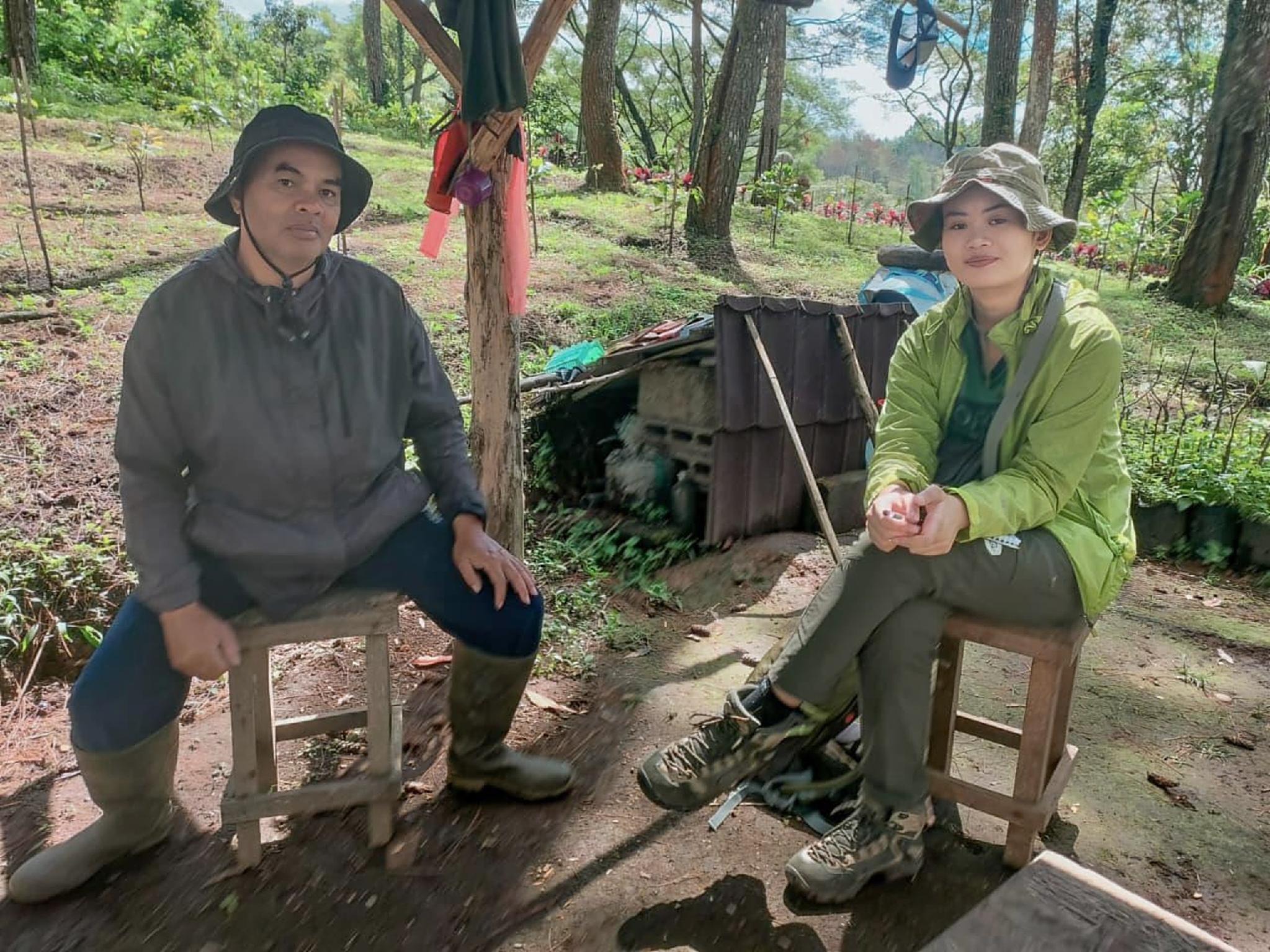
I was sitting with Pak (Mr.) Hari, one of the forest farmers on Mount Arjuno in Batu, East Java, in a small shelter he had built in the middle of his coffee farm. Around us, tall pine trees shaded rows of young coffee plants. Birds were singing, and a cool breeze drifted through the trees. It felt peaceful. But not far from here, whole slopes have been cleared for vegetables, which is still the most common way of farming on this mountain.
For decades, farmers here cut down the trees and cleared the land for vegetable farming. Between 1990 and 2022, vegetable farming expanded by 1,723 hectares to 4,221 hectares. It was the only way they knew to make a living from their land, and they never imagined it could lead to a disaster. In November 2021, a heavy rain came down and the mountain, with fewer trees, could no longer hold it. A flash flood swept through the villages below. Dozens of homes were destroyed, seven people lost their lives, and hundreds of hectares of vegetable farms were washed away.
As someone who lives downstream of Mount Arjuno, I used to blame the farmers. Why did they keep cutting down the trees? Why were they so greedy? Why didn't they think about the rest of us living downstream, who had to deal with the consequences? I had a lot of whys, but I never truly tried to understand them.
Then, I did. I talked to Pak Hari, not to interrogate him, but because I genuinely wanted to know what had happened. Pak Hari used to be a vegetable farmer himself before he switched to coffee. His story moved me. It made me realize that the farmers were never greedy. They were only trying to make a living from what they knew, and sometimes the profit wasn't even enough to feed their families. It didn't completely justify what happened, but knowing their side of the story made me more aware and less quick to judge. Instead of pointing fingers and being angry, I started trying to understand them.
That conversation made me want to help the farmers on Mount Arjuno. I started by volunteering with PROFAUNA Indonesia, which works to help farmers shift from vegetable farming to coffee and avocado agroforestry. The idea is to bring trees back to the bare slopes while giving farmers a crop that still pays, so the land can slowly regain its ecological functions and the risk of flooding goes down.
This journey was far from easy. Convincing farmers who had planted vegetables for years to switch to coffee and avocado was extremely difficult. Just imagine: some strangers come to your workplace, where you've worked for years, and tell you to do things differently because they say it's the better way. You might not believe them. You might even get angry with them, right? That's exactly what happened with the farmers. But we were persistent. We approached them gently, attending their cultural events and village ceremonies, so they could see that we were genuinely committed to being there for them.
Slowly, one by one, the farmers began to open up and agreed to shift from vegetables to coffee and avocado trees. Today, we've reached more than 100 farmers and restored almost 300 hectares of degraded land. When I measured the carbon on coffee agroforestry plots, they held up to six times more carbon per hectare than a vegetable field, and most of that carbon is stored in big trees such as pines. Big trees help hold the soil, which means less risk of another flood downstream.
But we're not only restoring the land. We're also restoring the farmers' livelihoods. From coffee agroforestry, farmers now earn on average about Rp4.4 million per hectare per month. That's more than three times what they earned from vegetables, and higher than the minimum wage in Batu City. Coffee also gives a more stable income, because its price doesn't swing as much as vegetable prices do.
Seeing the land recover and the farmers' lives improve, I feel hopeful. I can picture Mount Arjuno 10 to 20 years from now, when the trees we plant today have grown tall, and wildlife like the Javan langur, the Javan hawk-eagle and the muntjac deer are coming back to the forest. But as our work continued, I ran into a problem I couldn't ignore.
I talked to every farmer who had planted coffee and avocado and asked them to score their views on agroforestry. Every single one gave a perfect five out of five for protecting their soil and conserving the forests. But when I asked them, "Who will continue this coffee farm?" Most of them fell silent for a moment, and some looked confused. The average score for whether the next generation would continue the farming was only 3.6 out of 5. They believe in what they are doing. They just don't know who will take over.
Restoring land can be counted in hectares. Keeping it alive can only be counted in people. If we want restoration to last, we need young people who see coffee agroforestry as a livelihood worth choosing. That is why I am developing Kopi Muda Arjuno, an education project that introduces local students to coffee agroforestry and its benefits for forests and the local economy.
I used to blame the people upstream. Now I know that sometimes all it takes is to sit down and listen. The flood taught us that whatever happens on the mountain will always come down to us. Maybe that is exactly why young people from downstream, like me, need to go up the mountain, sit in a shelter like Pak Hari's, and ask how we can help. Because the future of Mount Arjuno won't only be decided by the trees we plant, but by the people who choose to stay and take care of them.